A new $0.15/transaction revenue stream launched and a flagship CRM's navigation modernized — by aligning six stakeholder organizations across five years of political deadlock.
Information Architecture · Enterprise UX · Stakeholder Alignment · Technical Constraints
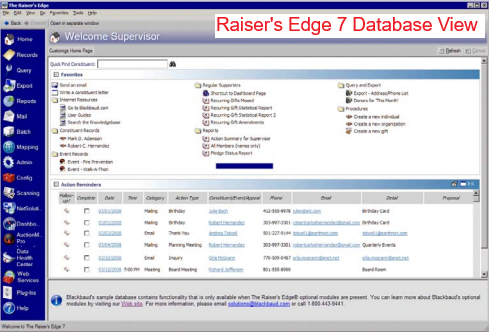
Competitors had gotten bolder — running "attack articles" from other nonprofit CRMs that directly mocked our legacy interface and framed us as outdated. The market perception was real, and it was affecting sales conversations.
We needed to modernize the core navigation and information architecture across all pages in Raiser's Edge NXT, our flagship CRM — while convincing skeptical internal stakeholders that the change was worth the disruption to their own workflows.
UX Research · Cross-functional Leadership · Scalability · Design Systems
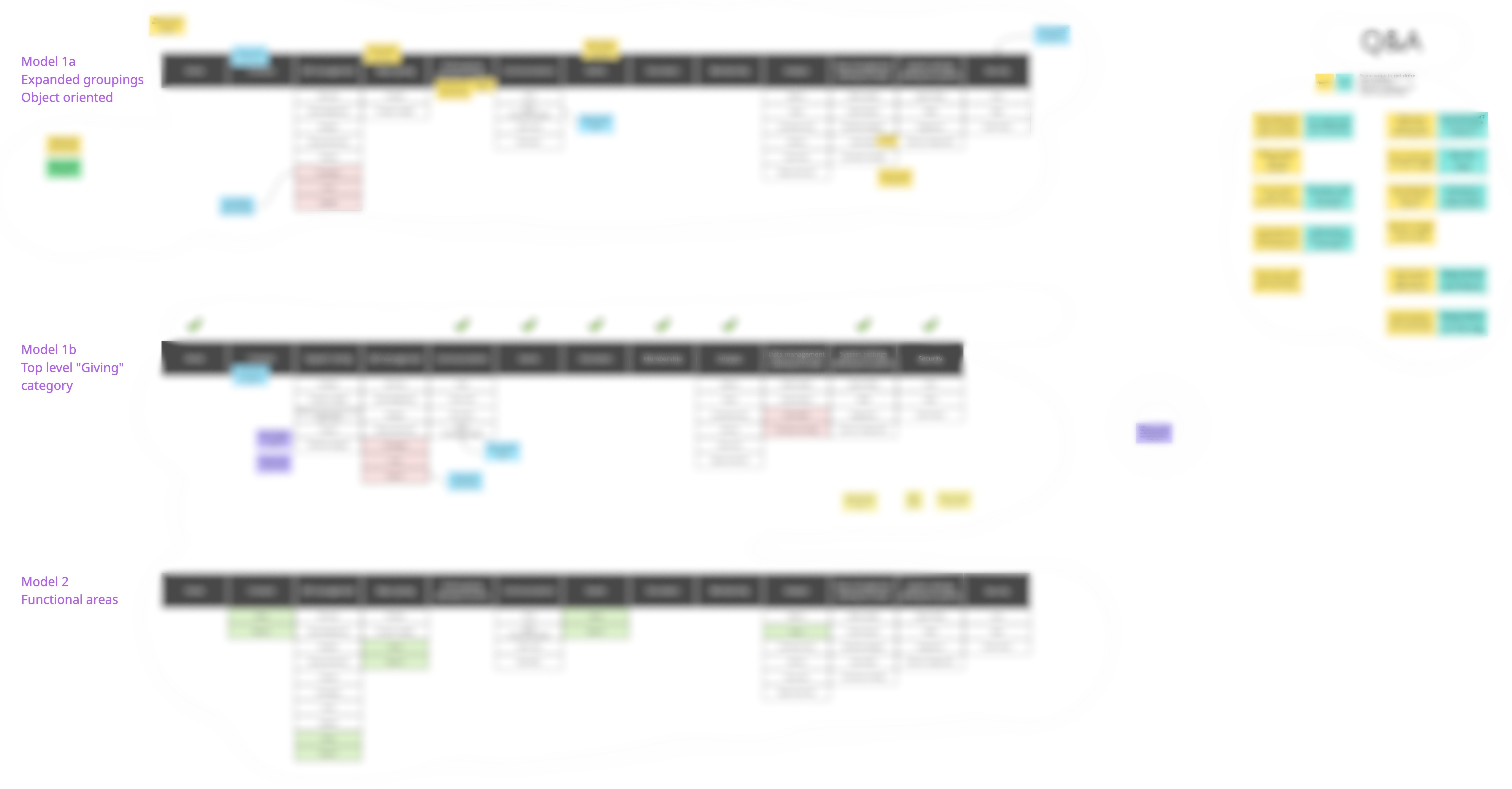
Navigation debates inside legacy products are political, not rational. I recognized early that no amount of design intuition would move this organization — only accumulated evidence would. I aggregated years of historical IA research from past designers, giving me a foundation of credibility that a fresh study alone could not have provided.
The Expert Endorsement That Changed Everything
A vocal RENXT consultant who had resisted the change became a visible advocate after seeing the IA research in full. In an organization where "who says it" matters as much as "what the data says," that endorsement carried more weight than another internal presentation would have.
Cross-functional Collaboration · Stakeholder Alignment · ROI · Product Strategy
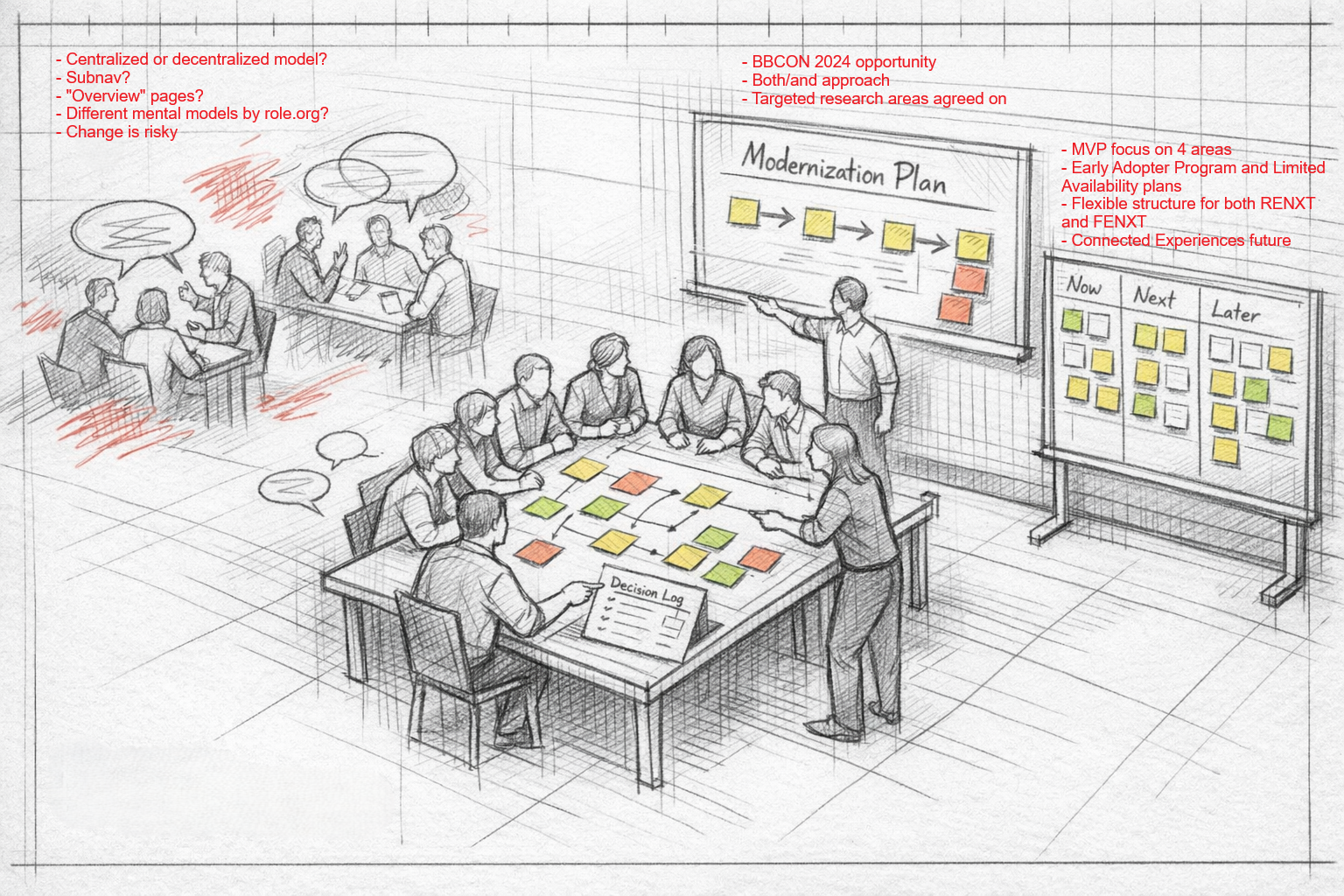
| Stakeholder | Their Concern | How I Addressed It |
|---|---|---|
| Customer Support & Training | Nav change would break existing docs and training materials | Aligned rollout with an already-planned visual refresh of docs — zero additional cost to their team |
| Sales & Marketing | Afraid of disruption during active sales cycles | Positioned modernization as a market signal ahead of the BBCON conference — turned a risk into a launch moment |
| Product Management | Concerned labels wouldn't reflect user mental models | Presented IA research findings; ran multiple rounds of label testing until all feedback was incorporated |
| Executive Leadership | High-visibility risk if rollout failed | Proposed a phased rollout with feedback monitoring at each stage, reducing the blast radius of any unforeseen issues |
Product Strategy · Design Systems · Revenue Growth · AI Integration
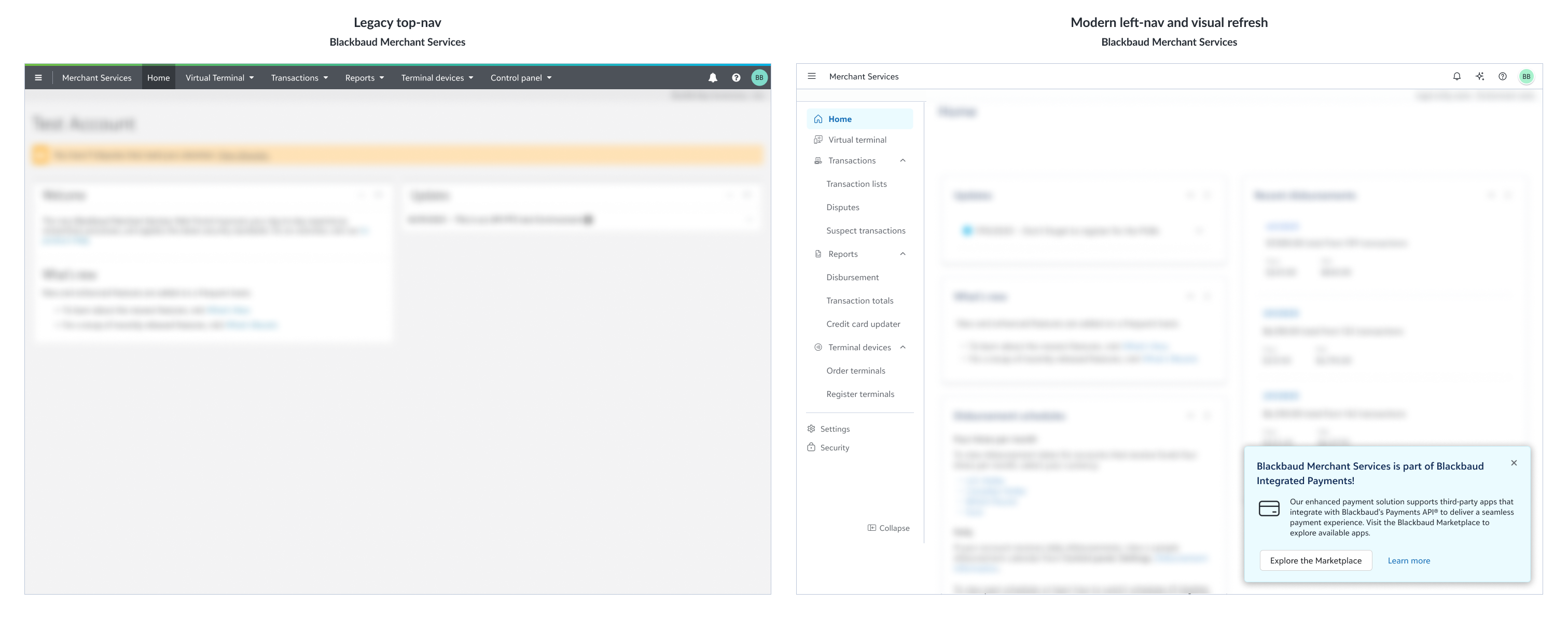
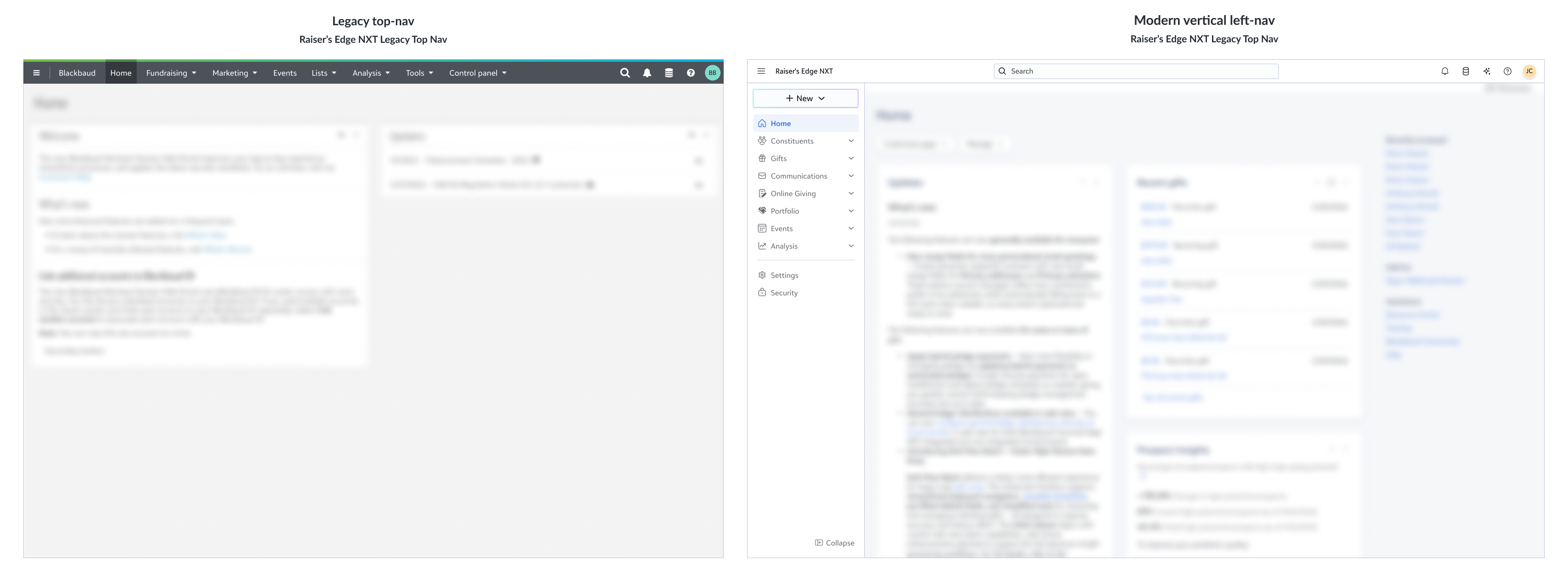
Moved primary areas to a left-hand sidebar, displaying more items on screen and aligning search functionality with donor-management mental models. The release was controlled and phased, with feedback monitoring at each stage to catch unexpected friction before it compounded.
I oversaw the visual refresh of the Blackbaud Merchant Services web portal for cross-product consistency, and coordinated with Product Management on the full rebrand to Blackbaud Integrated Payments.
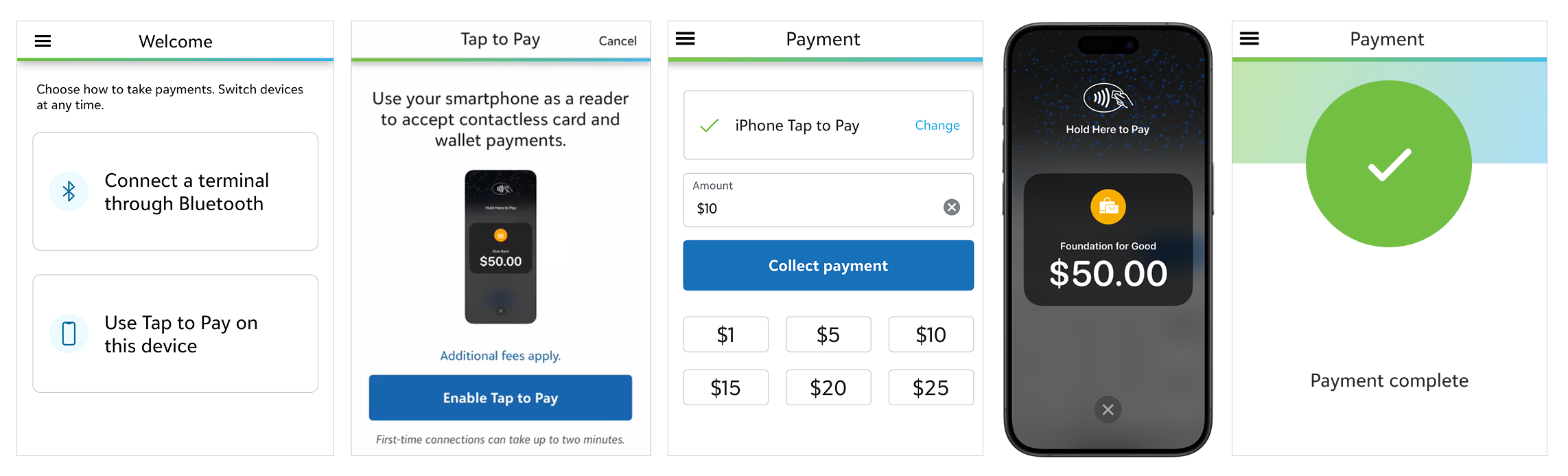
I launched a hardware-free, contactless payment solution allowing nonprofits to accept payments using only an iPhone. This established a new $0.15/transaction revenue line that did not previously exist in Blackbaud's product portfolio.
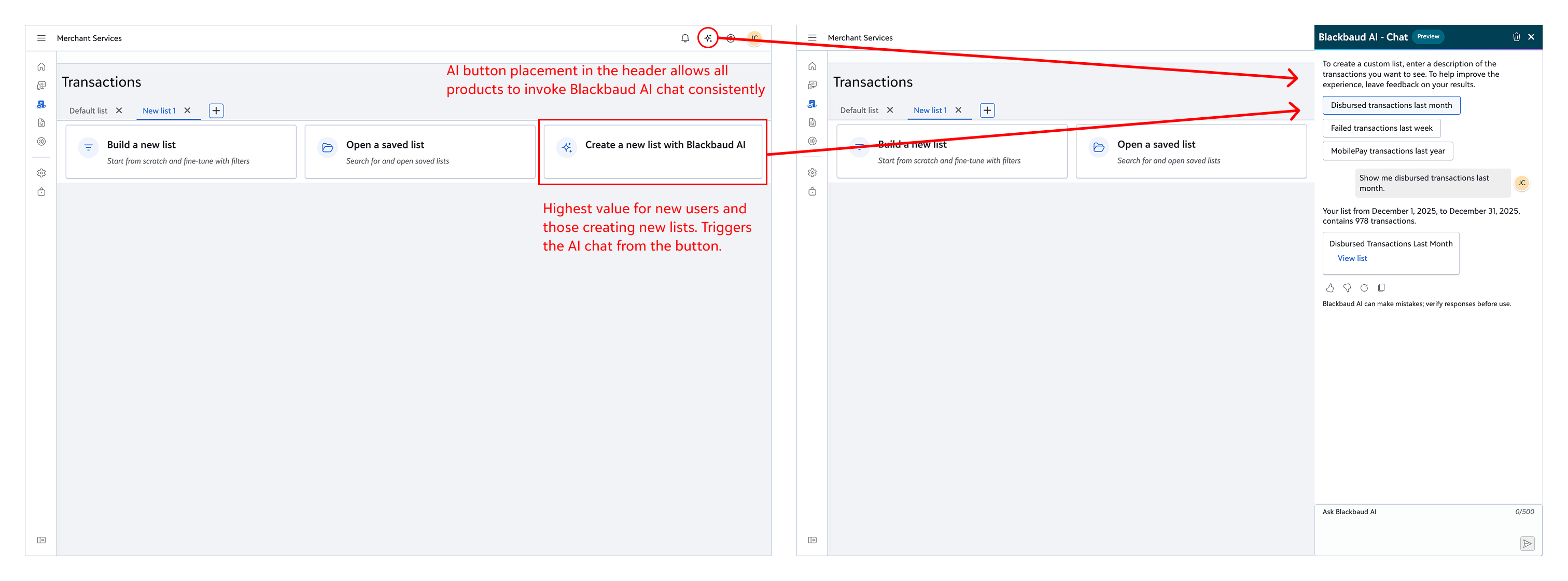
I collaborated with the design team to validate the placement of the "Chat for Blackbaud AI" sparkle icon in the top navigation bar, and designed an AI trigger pattern directly from action buttons in the BBMS portal — positioning AI where newer users are most likely to need guidance.
Lasting Impact
The navigation modernization established a template for evidence-based design decisions in other Blackbaud products like Financial Edge NXT. My advocacy for connected experiences helped enable BBMS data to become available within RENXT, expanding the strategic reach of the platform's intelligence layer.