The Hackathon Idea That Became a Company Strategy
The CPO elevated "Connected Systems" to a year-long corporate priority, and I earned a BBCON 2023 speaking invitation — starting from a 48-hour internal hackathon.
Two Departments, Two Languages, One Painful Manual Process
Platform Architecture · Cross-functional Collaboration · Scalability · Technical Constraints
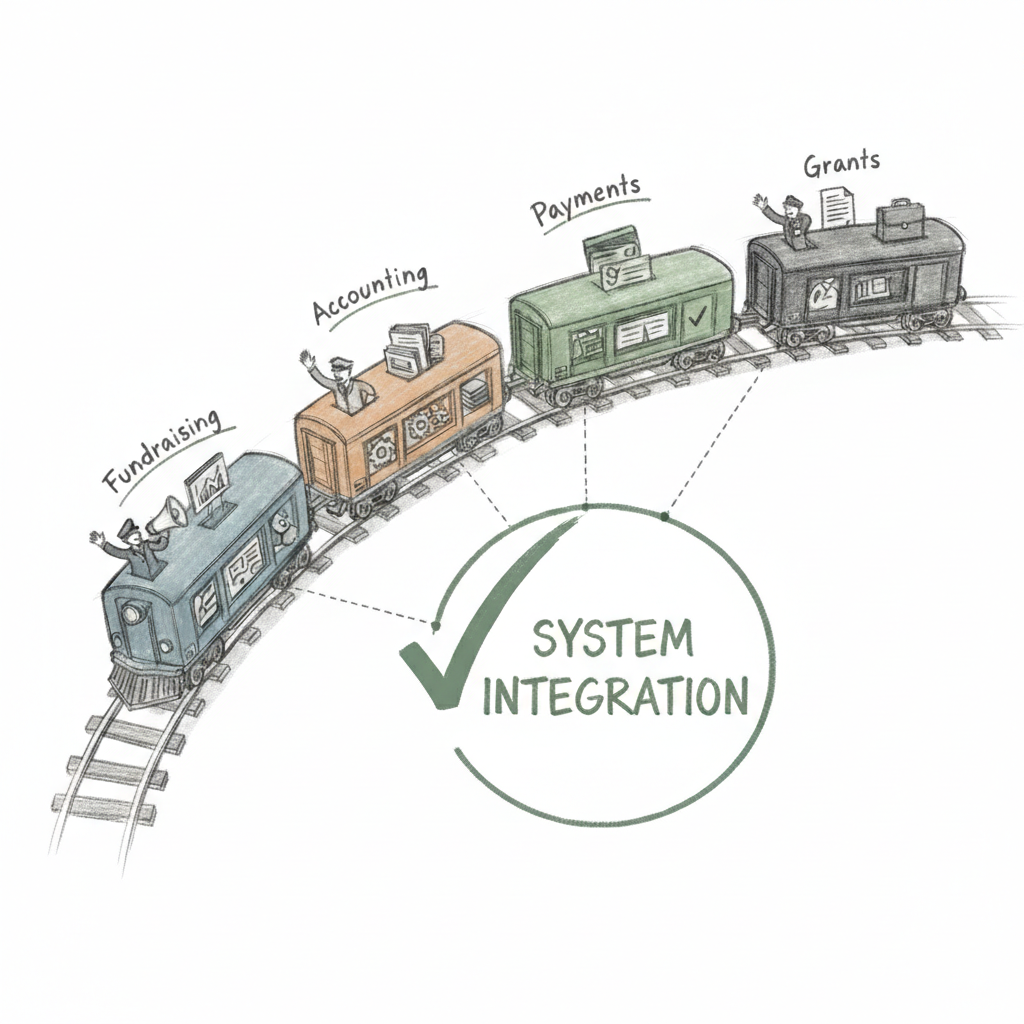
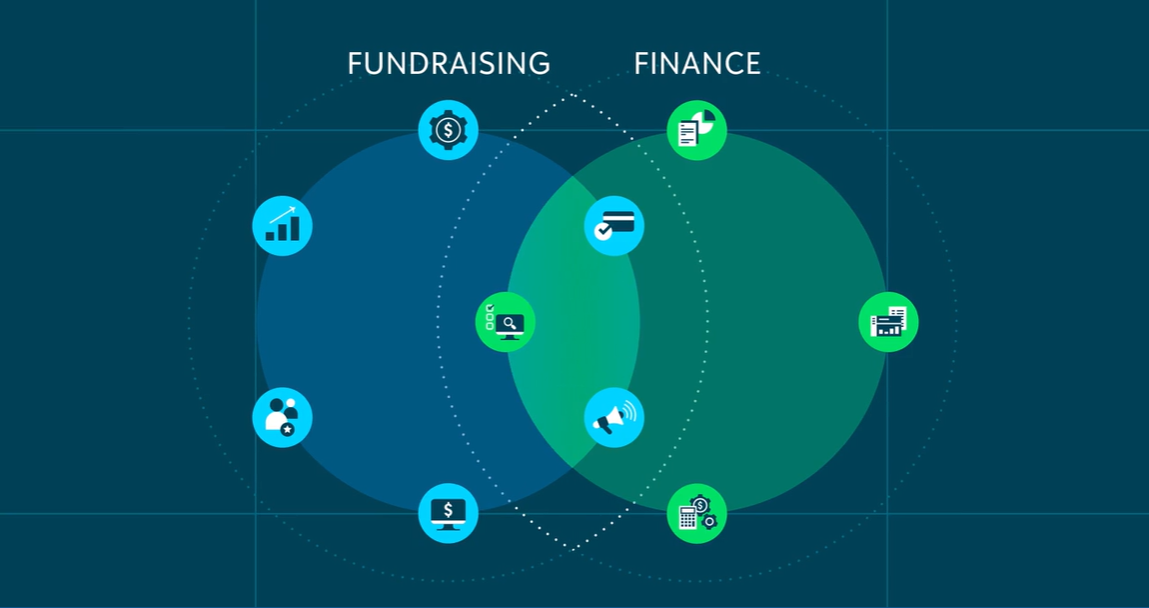
Fundraising and Finance departments at nonprofits operate in entirely separate silos, using different terminology and different data structures to describe the same money moving through the same organization. The result: a painfully manual reconciliation process.
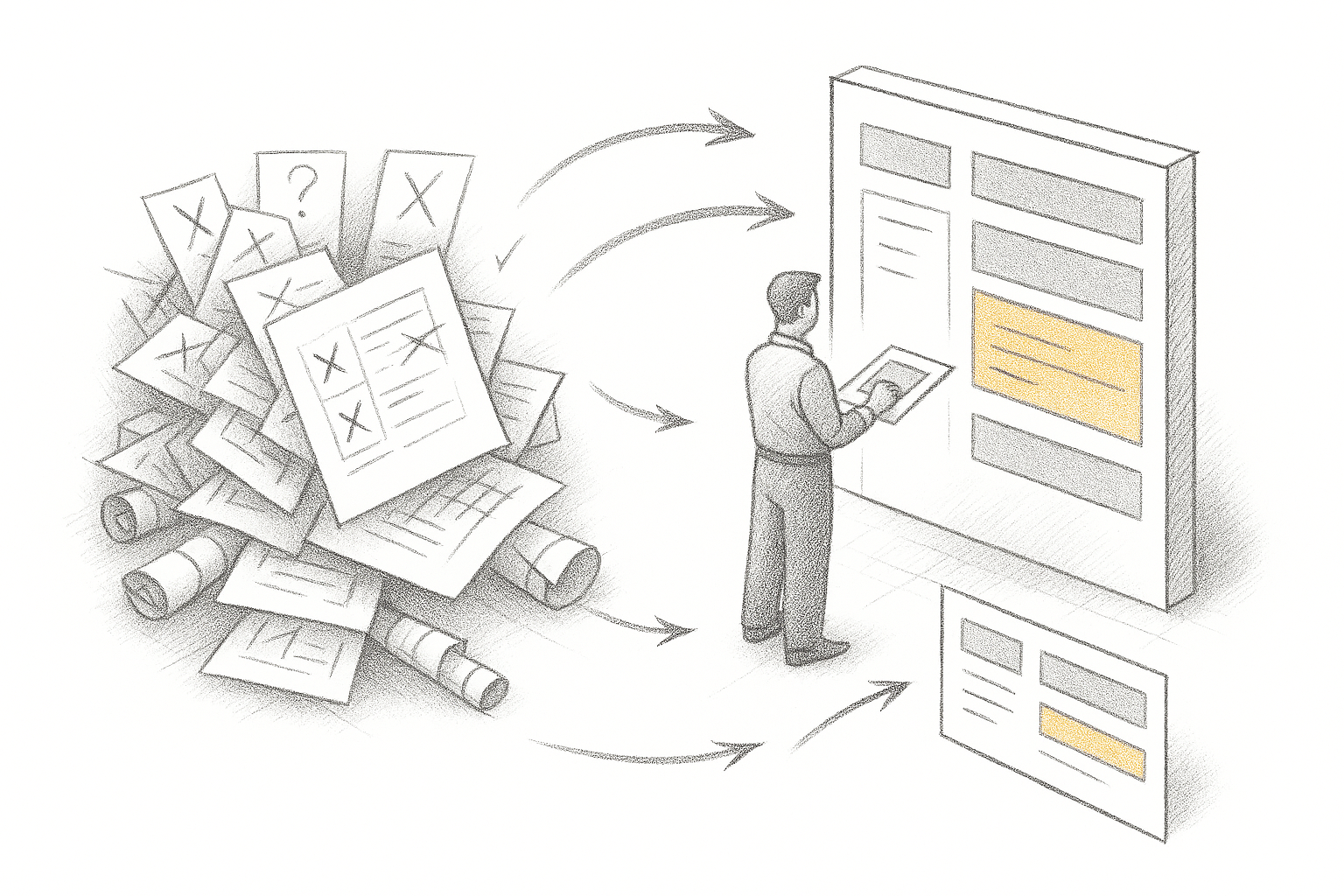
Staff routinely cross-referenced physical printouts with highlighters, hunting for discrepancies between what the CRM recorded and what the accounting system showed.
The business risk was real: smaller point solutions were beginning to automate parts of this workflow, making Blackbaud's manual process a competitive liability. We had the products to solve it — CRM (RENXT), accounting (FENXT), and payment processing (BBMS) — but they weren't connected in a way that made reconciliation automatic.
The products to solve this problem already existed. The missing piece wasn't technology — it was a connective architecture that made them work as one.
A Transaction ID That Connects Everything
Information Architecture · Design Systems · Scalability · Product Strategy
The root cause wasn't a UX problem — it was an architectural one. Blackbaud's products each tracked the same donation transaction using different internal identifiers. There was no shared key that could trace a donation from the moment of giving through payment processing, CRM recording, and accounting ledger reconciliation.
The insight: define a universal Transaction ID as the connective tissue across all three products. With that single foundational decision, automated reconciliation becomes possible — not just for today's workflow, but for every future cross-product feature built on payment data.
The adoption tension was equally real. Not all Blackbaud customers use all three products. We had to design a solution that delivered full value for customers with the complete suite, while still providing meaningful utility for partial adopters.
We designed around this tension rather than pretending it didn't exist. For users with RENXT + FENXT + BBMS, we automated reconciliation matching entirely. For partial adopters, we provided manual linking tools that surfaced the Transaction ID across whatever products they did have.
From 48 Hours to a Year-Long Corporate Priority
Cross-functional Leadership · Product Strategy · Stakeholder Alignment · ROI
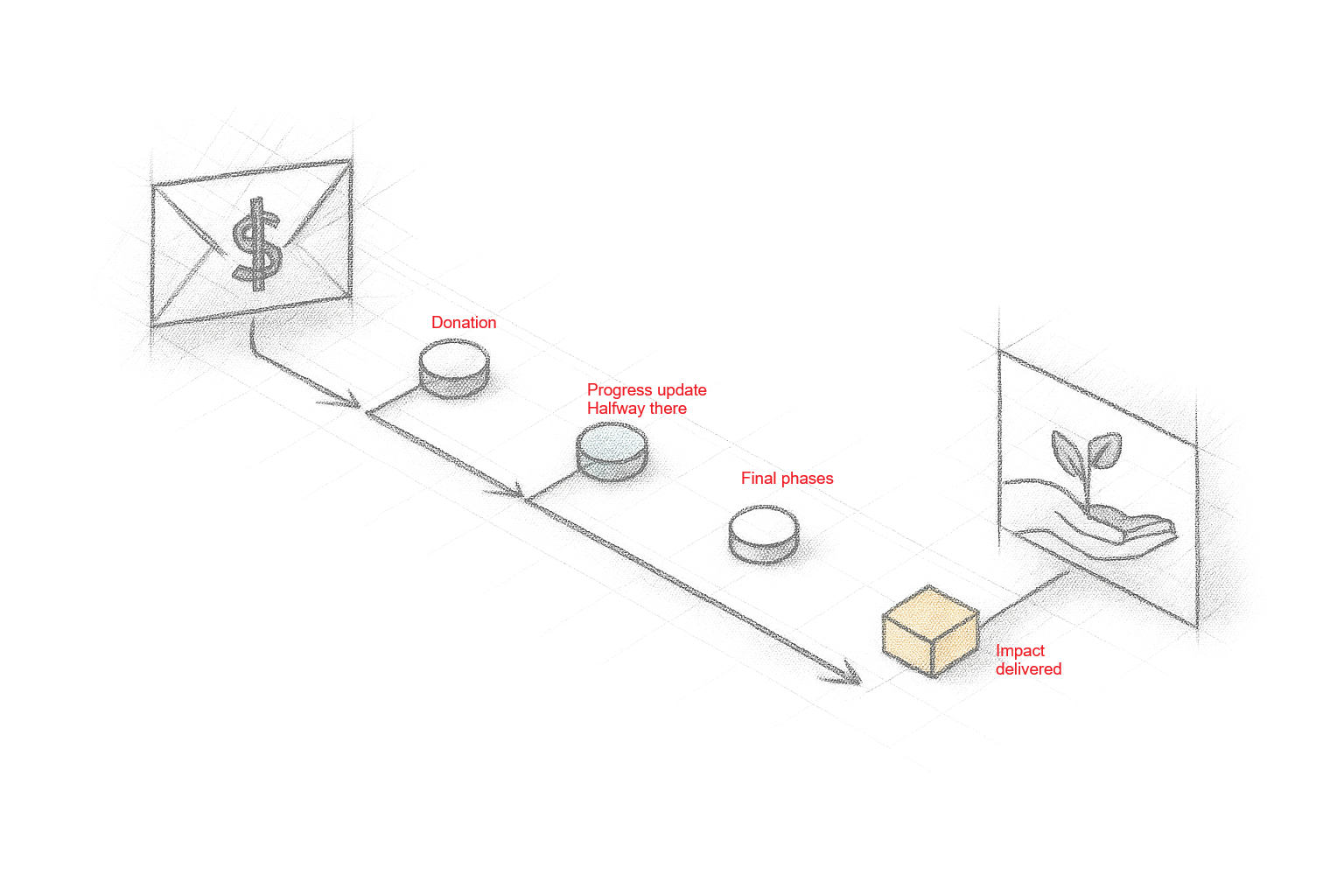
I pitched a concept for our internal "Off the Grid" hackathon that reframed the reconciliation problem entirely: instead of building a better matching tool, I proposed a donation impact tracker modeled after package delivery applications like FedEx.
What changed internally
The "Connected Systems" strategic priority was elevated to CPO level, bringing dedicated engineering resources to cross-product integration work that had previously competed with individual product roadmaps for bandwidth.
What changed for the product roadmap
The vision for donation impact tracking has influenced roadmap conversations in Impact Edge and Blackbaud's grantmaking solutions — broadening the concept beyond financial reconciliation into mission delivery reporting.
What Changed Because of This Work
Platform Strategy · Design Systems · Scalability · Cross-functional Leadership
Operational Impact
Automated transaction matching is saving nonprofit finance teams hours of manual spreadsheet reconciliation per close period — reducing human error and freeing staff to focus on mission-critical work.
Platform Architecture
The Transaction ID is now established as the unique connective key across Blackbaud's product suite — a foundational decision that enables every future cross-product feature built on payment data.
Strategic Priority
The "Connected Systems" strategic priority, elevated to CPO level, brought dedicated engineering resources to cross-product integration work that had previously competed for bandwidth.
Roadmap Influence
The vision for donation impact tracking has influenced roadmap conversations in Impact Edge and Blackbaud's grantmaking solutions — broadening the concept into mission delivery reporting.
The Larger Lesson
A 48-hour passion project became a year-long corporate priority because the underlying problem was real, the solution was concrete, and the framing connected to something leadership already cared about: competitive differentiation. UX-led innovation does not require a large team or a formal mandate. It requires the ability to see a systemic problem clearly, propose a solution that is specific enough to be buildable, and communicate it in language that resonates at the executive level. That is the work I do.
